Ergonomic Equipment For Your Desk

I thought I would share with everyone the ergonomic equipment I use at my desk.
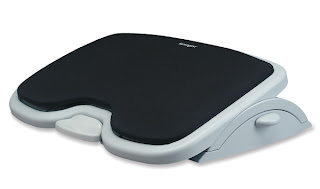
foot stand 

Kensington Solemate Comfort Footrest with SmartFit System 

I got this foot rest because of the soft foam surface, 
so when I’m barefoot on the computer, my feet are comfortable. 
Amazon List Price: $42.14 & FREE Shipping

Rain Design iLevel Laptop Stand with Adjustable Height and Swivel Base 

I bought this stand because it matched my MacBook Pro, plus
it’s pretty and it swivels.
Amazon List Price: Price: $79.90 & FREE Shipping

Wacom Bamboo Splash Pen Tablet

My old wacom recently broke, and I’m currently
trying out this one. The size is on the small end, which I like
as my desk is overly crowded.
 Amazon List Price: $60.41 & FREE Shipping

Microsoft Natural Ergonomic Keyboard 4000

Although this is bulky, it’s a great ergonomic keyboard.
Amazon List Price: Price: $37.29 & FREE Shipping

Ergonomics Simplifed Yes 74 Mesh Back

I picked this chair because of all the possible adjustment options, and
I like the lumbar support from a mesh back. Plus it was on the cheaper end
for high quality ergonomic chairs.
List Price: $294.00


3 Ingredient Bronzing Moisturizer

The vast majority of cosmetics available today have many carcinogenic and toxic additives in their ingredients list. They have been linked to a variety of maladies ranging from eczema and hives on the milder side to more serious issues like lung damage and cancerous breast tumors. Click here to learn more about ten toxic ingredients you should avoid in any cosmetic product.

I have never really been one to wear makeup since I have sensitive skin and never really learned how exactly to apply it. Recently, I had been looking for a natural product to balance out a few lighter shaded spots on my face.  Even many of the natural makeup lines contained additives that I was less than sure about, so I decided to make my own bronzing moisturizer. This moisturizer only contains 3 ingredients, all of which are great for your skin, and it smells amazing!

3 Ingredient Bronzing Moisturizer– Raw/Vegan/Organic
 
Turmeric Powder– Anti-inflammatory and antiseptic, known to even out skin tone and add glow to skin.
Cacao Powder– Smells amazing, and contains sulfer which is essencial for healthy hair, nails, and skin.
Coconut Oil– Moisturizing, protects skin from free radicals, anti-bacterial.
I am estimating the measurements that I used for my skin tone: 3 TBS. Cacao powder, 2/3 Tsp. Turmeric Powder, 2 Heaping TBS. Coconut oil. Chances are you know your own skin tone best so adjust to your liking. I recommend starting with just a little turmeric so you get a nice glow rather than an accidental yellow tone. If you have a lighter skin tone cinnamon powder (also anti-bacterial), and arrowroot starch can be used to cut the cacao powder and lighten the tone. To add a subtle red or pink undertone use a super fine mesh strainer to stain beet root powder or hibiscus powder, and add the fine strained powders to your mixture until you get the shade you desire.
Voila! your very own customized bronzing makeup!
Sources:
http://www.fitsugar.com/10-Toxic-Cosmetic-Ingredients-Avoid-204330
http://www.lovingfit.com/nutrition/raw-cacao-amazing-super-food/
http://www.bewellbuzz.com/general/benefits-of-turmeric-for-skin-and-more/
http://coconutoilforskin.com/

Cutting Sugar Cravings with Low-glycemic Fruits

Ever since I stopping consuming a lot of kefir, my sugar cravings have been out of control. The reason I reduced my consumption of kefir was due to a really bad detox reaction. I am slowly building up my tolerance to kefir, but in the mean time, I was feeling crazy going on and off sweets. When I ate dessert, even healthy options, all I did is crave more dessert, instead of satisfying that sweet craving. When I didn’t eat any sugar, my energy was crazy low almost to the point of feeling ill. Recently, I think I’ve figured out a good solution to my problem that could be a sustainable lifestyle change, instead of a diet trend. That solution is low-glycemic fruits.

I buy a large bag of organic frozen fruit high in antioxidants from Costco to add them to my smoothie every morning. The bag contains strawberries, blueberries, raspberries, pomegranate seeds, and tart cherries. Besides adding them to my smoothie, I’ve been snacking on them frozen. Berries generally have a GI from mid 30 to 40s and cherries have a GI of 22. I’ve also eaten an apple to cut cravings which has a GI of 38. Note that low-glycemic is 55 or less. Grapefruit is also a great option at a GI of 25, but I’m skittish after I cut myself eating grapefruit, so be careful! Now that strawberry season is back in LA, this diet change couldn’t have come at better time.

Dehydration and Sugar Cravings

I’ve also been trying to increase the amount of water I drink. According to Donna Gates, author of the Body Ecology Diet, “Cravings for sugar are often a sign of dehydration. Drink a couple of glasses of water before you give in to that craving and you probably won’t want those sweets after all.” Since fruit is hydrating as well as sweet, it may also satisfy your cravings better than a chocolate bar or cookies, which will actually make you thirstier and feed your sugar craving.

Why care about a low-glycemic diet and sugar?

Sugar has a inflammatory effect on the body, therefore, a low-glycemic diet is an anti-inflammatory diet. I just started reading The Hormone Diet by Natasha Turner, ND, and she recommends a low-glycemic diet for keeping your hormones in balance. I also recently watched the Paleo diet, featured on Dr. Oz, which is another low-glycemic diet that is extremely popular right now for weight loss and health. The Body Ecology Diet by Donna Gates cautions against sugar, as it can feed dangerous yeast, fungus, and bacteria growth.

If you have any solutions that you use to cut sugar cravings, I would love to about hear them!

Source:
The Hormone Diet by Natasha Turner, ND
The Body Ecology Diet by Donna Gates
http://nutrigenie.biz/gifruits/FruitsGlycemicIndexFoodListPage2.html
http://www.livestrong.com/article/401235-the-best-low-glycemic-fruits/
http://www.huffingtonpost.com/2013/03/21/inflammatory-foods-worst-inflammation_n_2838643.html#slide=2131351

Top Ten Reasons to Drink Bone Broth

broth

1. Helps you detox by nourishing the liver.

Broths contain proline and glycine, which is a precursor amino acid for glutathione. Large amounts of glutathione are needed to help the liver get rid of chemicals.

2. Considered a rich source of minerals.

Minerals such as calcium, silicon, sulphur, magnesium, phosphorous & trace minerals are in an easily assimilable form.

3. It’s cheap.

Grass-fed hormone and antibiotic free animal products are pricey, but buying bones especially if they are used multiple times to make large quantities of broth is cheap. It may also save you money by replacing expensive mineral or protein supplements.

4. Great for healthy nails, skin, and hair.

When bone broth cools it forms gelatin, (like jello). Gelatin is basically the same as collagen. Collagen is when it is in the body, and when it’s extracted we call it gelatin. Many people take gelatin or collagen supplements to strengthen their hair and nails.

5. Important for digestive health.

Many people drink bone broth with Leaky Gut Syndrome to help repair the lining of the gut. The glycine improves digestion by increasing gastric acid secretion, and glutamine, also found in bone broth, is important fuel for cells in the small intestine.

6.  Supports the Immune System.

The tradition of having chicken soup when you are sick, has medical truth to it. The detox properties and minerals help your body get rid of the bad stuff, like colds, faster.

7. Has a long rich history as a Superfood.

It is used in Chinese medicine to strengthen and nourish our essence or qi, and as well as warm the yang and build blood.  A South American proverb says, “Good broth will resurrect the dead.” Even as early as the 12th century, Egyptian physician Moses Miamonides prescribed it for colds and asthma.

8. Reduces pain.

Bone both contains the broken down material from cartilage and tendons, such as chondroitin sulphates and glucosamine, now sold for arthritis and joint pain.

9. It tastes good.

I’ve eaten a ton of bad tasting food in the name of health, but broths actually improve the taste of whatever you are cooking, or taste delicious as a beverage. I’ve even dissolved some curry powder in it, for a different flavor and for the anti-inflammatory benefits of turmeric.

10. It’s easy to make.

I’ve let it simmer on the stove, but an even easier way is to put in a crockpot with some vinegar, salt, and I add a few cloves of garlic. Then just let it simmer for 24 to 48 hours. I love one pot wonders.

Sources:
http://www.jadeinstitute.com/jade/bone-broth-health-building.php
http://divinehealthfromtheinsideout.com/2012/05/bone-broth-nutritional-facts-benefits/

Bone Broth: Heal Your Gut and Lose Cellulite!


http://www.westonaprice.org/food-features/broth-is-beautiful
http://thewellspring.org/the-power-of-the-almighty-bone-broth/
http://www.wisechoicemarket.com/benefits-of-bone-broth/

Understanding Your Pain

pain


I just finished reading this book, Explain Pain by David Butler M.App.SC and Dr Lorimer Moseley PhD, which I borrowed from my Physical Therapist. Although some of the concepts were complicated, I thought everything was explained in a way that a person with no medical background (myself) would be able to understand.

The best part of the book is how they scientifically explained the connection between the mind and body and how it directly influences your pain. I also liked how they didn’t commit to a recovery method, or preach a way to get better. Instead, they advocate to learn as much about pain and your condition to help you make informed decisions on your healing journey and to lessen your fear about pain that you can’t explain or understand. On a less positive note, I thought they could have addressed better some of the unlikely causes of pain, such as nutritional deficiency, bacteria, viruses, heavy metals, and other environmental toxins. They do mention that everyone’s pain is unique to them, which I found to be particularly helpful since most medical professionals will just diagnose what is familiar to them, and not necessarily see a patients unique situation & body.

Here are some quotes that I found to be particularly helpful:

“Because tissues are no longer the main issue, it is often not helpful to seek an understanding of the diagnostic label. It is better to seek an understanding of the particular symptoms which are a feature of your unique presentation”

‘For many people in persistent pain, this is a critical issue to understand and well worth repeating. In this sensitised state, the brain is being fed information that no longer reflects the true health and abilities of the tissues at the end of the neurones. Put another way, the brain is being told that there is more danger at the tissues than there actually is.”

“It is important to emphasise here that, when the brain is sensitised, it is not just the experience of pain that is persistently produced. It also leads to persistent changes in the sympathetic and parasympathetic nervous systems, endocrine, immune and motor systems”

“All sorts of fears can lead you into a cycle of pain and disability from which it can be difficult to break free. Some of the information that you receive from health professionals, friends, family and the media may contribute to fear…To face these fears, you need to be informed and understand as much as possible about your body. And you will need to be brave – this is the vehicle for the road to recovery”

At the end of book there is a Further Reading Section that recommends the following titles, which I plan on looking into for future reading.

1. Wall, P.D., Pain, the Science of Suffering. 1999,
London: Weidenfield & Nicholson

2. Melzack, R. and P.D. Wall, The Challenge of Pain.
2nd ed. 1996, London: Penguin

3. Nicholas, M., et al., Manage your Pain. 2000, Sydney: ABC Books

4. Martin, P., The Sickening Mind. 1997, London: Harper-Collins.

5. Sapolsky, R.M., Why zebras don’t get ulcers: an updated guide to stress, stress-related diseases, and coping. 1998, New York: W.H. Freeman and Co.

6. Shone, N., Coping Successfully with Pain. 1995, London: Sheldon Press.